Patient and Public Involvement and Engagement
Research Shaped by Lived Experience
Building a partnership between Edinburgh Metabolism researchers and our local community to tackle diabetes, obesity, and cardiometabolic disease together.

Our Commitment to PPIE
At Edinburgh Metabolism, we study the biological basis of metabolic health, from fat distribution and inflammation to dietary influences. However, we believe that scientific discovery should not happen in a silo. To ensure our research creates real-world impact, we are committed to Patient and Public Involvement and Engagement (PPIE).
Our goal is simple: to transition from communicating to the public, to collaborating with them. By listening to people with lived experience of metabolic conditions such as type 2 diabetes and fatty liver disease, we ensure our research addresses the questions that matter most to patients and their families
Research Rooted in Community
We recognise that those living with metabolic conditions are "experts by experience," and their insights are as vital as our laboratory data.
Our engagement strategy is built on three established pillars:
-
Co-Production with Patients: We actively partner with individuals living with type 2 diabetes, liver disease, and obesity, as well as their families and carers. By involving these groups in our research design, we ensure our scientific questions align with real-world patient needs.
-
Addressing Health Inequalities: We are committed to ensuring our research benefits everyone, particularly communities disproportionately affected by metabolic disease. We focus our engagement efforts in Southeast Edinburgh, working directly within areas like Niddrie and Craigmillar to tackle local health disparities.
-
Embedded Community Partnerships: We maintain strong, collaborative links with the NHS and third-sector organizations, including Carr Gomm and Niddrie Medical Practice. These partnerships allow us to move beyond our Research Institute and engage with patients in trusted community spaces.

Recent Activities
Spotlight: Community Dialogue at Niddrie GP Practice
November 2025
In collaboration with Carr Gomm and Niddrie Medical Practice, Dr. Elizabeth Haythorne, Dr. Mark Nixon, and Dr. Cecile Benezech visited a local Diabetes Peer Group. This wasn't a lecture; it was a knowledge exchange. While our researchers shared insights on how environmental factors and stress impact blood glucose, the primary goal was to listen to the lived experiences of the group members. These discussions are helping us reshape how we approach metabolic research questions.

Policy Impact: Promoting Healthy Ageing at Holyrood
January 2026
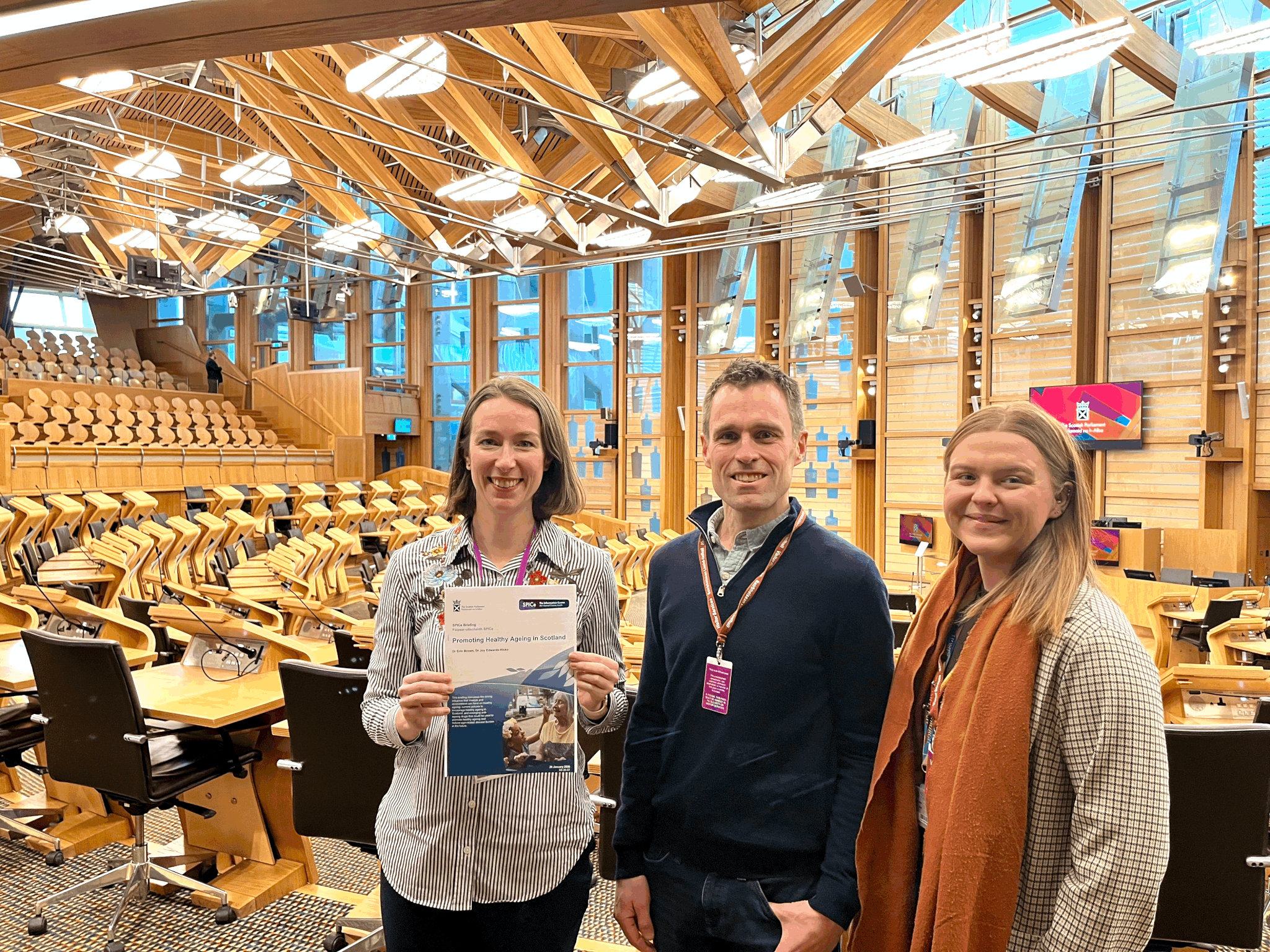
Dr. Will Cawthorn represented Edinburgh Metabolism at the Scottish Parliament for a briefing on "Promoting Healthy Ageing in Scotland." Invited by SPICe (Scottish Parliament Information Centre), Dr. Cawthorn presented his group’s research on bone marrow adiposity to MSPs and policymakers. Engaging with policy leaders ensures that our scientific findings regarding nutrition and ageing translate into actionable health strategies for Scotland.
Science in the Classroom
Coming in March 2026
We are preparing to visit a local primary school in Niddrie to inspire the next generation of scientists. Stay tuned for updates!
Public Engagement: "Licence to Stress" at Edinburgh Science Festival
April 2026
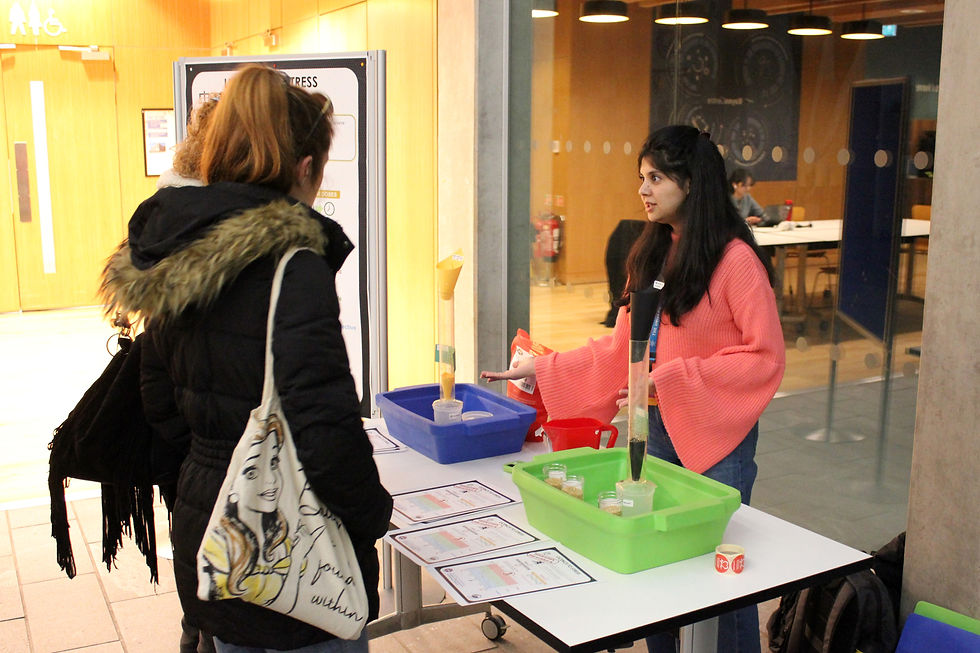
On 13 April, Dr. Mark Nixon and a team of researchers put on an event, 'Licence to Stress', as part of this year's Edinburgh Science Festival. Using a spy theme to illuminate the science, the event showcased BHF-funded research on the stress hormone cortisol and its effects on our health. This was an opportunity to challenge the idea that cortisol is purely harmful, showing it instead as part of a vital system that only becomes problematic when pushed too far.
The event, which took place at the University of Edinburgh's Bayes Centre, included a talk and Q&A session with Mark, followed by activities to help attendees get to grips with the science, which were run by Mahnoor Asif, Doanne Chin, María Paula Huertas, and Dr Giovanni Levatè. Preparations in the run-up to the event and on the day were supported by Ed Dadswell.
The event proved to be popular, with all tickets sold out, very positive feedback, and many participants eager to ask questions and talk to the scientists about their work. Attendees described it as "interesting and engaging", "very accessible for non-scientists", and commented on the "excellent imaginative presentation" and how they "loved the metaphors and graphics to make tricky subjects easier to understand".